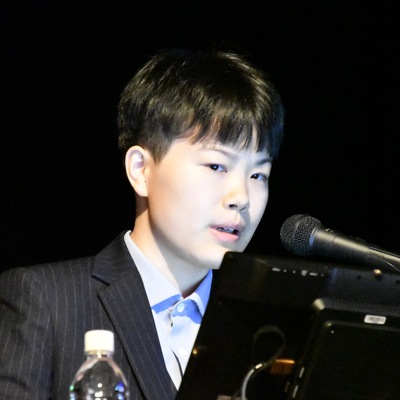
Personal Statement
I work at the intersection of digital dentistry, clinical workflows, healthcare data, and AI-enabled product development. My background spans photopolymer-based additive manufacturing, dental CAD/CAM, large-scale dental EHR research, clinical AI applications, and real-world dental laboratory operations. I am particularly interested in turning complex clinical problems into technical requirements that engineers, designers, and product teams can understand and execute.
I serve as a Lead Clinical Consultant at a dental laboratory, where I work between dentists, dental technicians, production teams, software teams, and suppliers. My role is to translate clinical concerns into clear, technically actionable requirements—and to translate design, manufacturing, and system constraints back into information that dentists can use to make clinical decisions.
At UTHealth Houston, I have worked on AI-related projects involving large-scale dental electronic health records, clinical prediction, foundation-model research, retrieval-augmented generation, and patient-centered decision-support applications. My work focuses not only on model development, but also on how clinical data should be structured, interpreted, validated, and integrated into real-world dental workflows.
In PhD Stage, my research focused on photopolymer-based digital manufacturing. I worked on two major additive-manufacturing platforms: DLP-based dental 3D printing and PolyJet multi-material fabrication. My first-author and co-author research has been presented at international meetings, including IADR, AADOCR,FDI, and JASD, and published in International Journal of Bioprinting, Polymers, and other peer-reviewed journals.
My research has contributed to CAD/CAM innovation, 3D printed sports mouthguards, and dental polymer durability evaluation, influencing both clinical workflow optimization and material science development. It has also been recognized by awards such as Wise Scholarship for Pioneer Research in JST and the Neo Pharmaceutical Industry Award in JASD.
I serve as a researcher at alma mater Institute of Science Tokyo, supporting professors and junior researchers in project design, manuscript development, and peer review.